
Review by GiGi Kang
Simon & Schuster/Paula Wiseman Books, 2022
272 pages, hardcover, $21.99 CAD, 978-1-6659-0261-8
8 to 12 years, Grades 4 to 6
Fiction, Mystery
“I roll up the ball to my fingers and back down into my cupped palm. My body doesn’t like being still. Sometimes my legs shake. Sometimes my toes scrunch up in my Crocs. Mom says she read that it’s called stimming, and it’s common in kids with autism spectrum disorders. She was worried about it, but I told her it actually makes me feel better. Sometimes it’s nice to focus on something I can control.
I think autism is a neat word. It basically means isolated self. A Swiss guy named Eugen Blueler came up with the term and spared a whole lot of kids from being Bluelers.
I remember another parent once asked my mom, “Oh … Is Green autistic?” It was like it was a bad word. Like I had a disease or something. But I’ve met other kids on the spectrum and I have to say … they all seem pretty happy. Including me.”
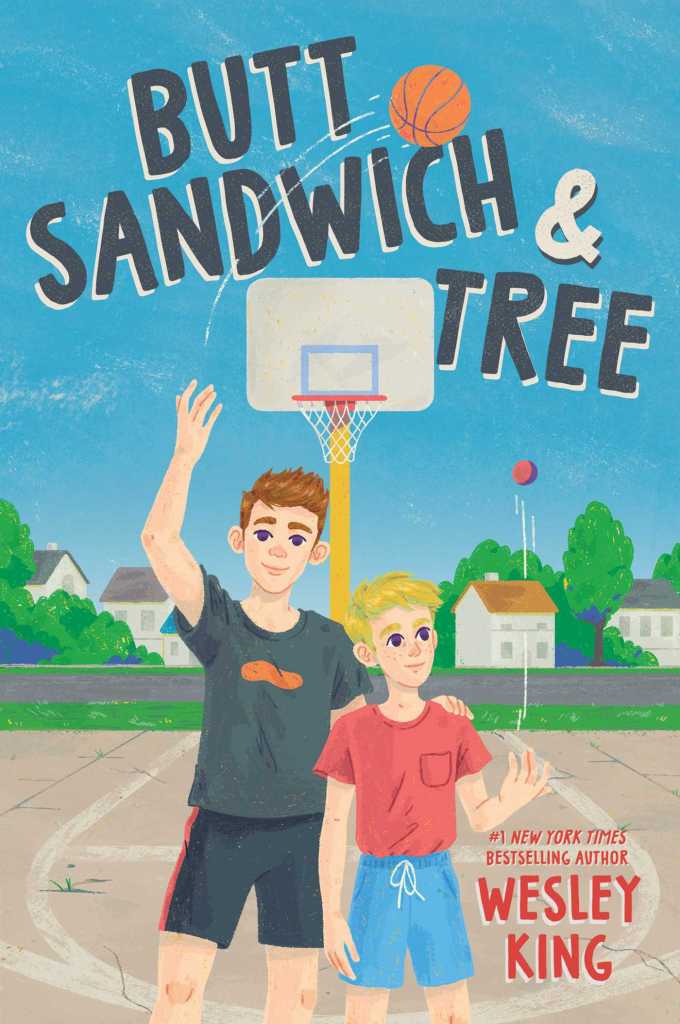
Cheese sandwiches, Crocs, and PlayStation. These are eleven-year-old Green Bennett’s favourite things. Green is excellent at math, reads a lot of books such as The Hardy Boys, and is happy with who he is. Oh, and he has autism spectrum disorder, also known as Asperger’s Syndrome, but that is his least defining quality of all. However, when Coach Nelson’s necklace holding his late wife’s ring goes missing, Green is the first person everyone suspects because he’s different. His older brother, Cedar, is the thirteen-year-old star player on the basketball team and the only one who believes Green’s innocence.
“Butt Sandwich” in the novel’s title refers to the common mispronunciation of Asperger (assburger) and Cedar makes the “Tree.” Together, they call themselves the coniferous superteam as they embark on the Case of the Missing Ring. Since Coach and everyone else seems convinced that Green is the culprit, the two brothers begin their investigation of finding the real thief. As the brothers uncover unexpected stories and get to know their school community better, they reveal we are all much more similar than we think. Readers who enjoy detective stories will find that Butt Sandwich & Tree forgoes the chilling dangers of the detective genre for a witty, light-hearted adventure.
Told in alternating perspectives between the two brothers, readers experience Green’s developing boldness and Cedar’s protectiveness over Green, including his occasional temper. Throughout the novel, Cedar is protective, unconditional, and nurturing toward Green—the word “loyal” falls short in describing him. Cedar’s greatest passion is basketball, and his perspective also adds action in the form of sports to the story. The alternating perspectives present the worries and the pride both brothers experience for each other, emphasizing the priority their relationship holds in their day-to-day lives. Both perspectives are engaging, allowing a wider experience of the narrative.
There are facts about Asperger’s throughout the novel, including the recent change of “Asperger’s Syndrome” as the official name of the diagnosis. Through the character Dr. Shondez, King explains that Hans Asperger was working with Nazi Germany, so many countries no longer use the term and opt for “autism spectrum disorder” instead. Although this is a fictional book, there are truths woven throughout the story, including the believable representation of Green’s own experiences both as someone diagnosed with autism spectrum disorder and as a completely self-assured individual.
In his author’s note, King describes Butt Sandwich & Tree as “a personal story about one of the people [he] know[s] best, and a reminder that the names that matter most are the ones we give ourselves.” The novel is based on his own relationship with his younger brother who was diagnosed with autism spectrum disorder. King based Cedar on the love his older brother and himself have for their “little bro,” as Cedar would say. King’s real story behind the characters, and the choice to share this in his author’s note, adds power to an already compelling and tender novel.
Butt Sandwich & Tree is endearing and a fun read that presents Green first as a valuable individual rather than a character defined by his diagnosis. Young readers on the spectrum themselves will find a friend in Green, and readers with an interest in basketball will find a friend in Cedar. Anyone who has cared deeply for a family member or close friend will relate to the message symbolized by the relationship between the brothers—that the greatest difficulties can be tackled together.
GiGi Kang is a UBC graduate with a Bachelor of Arts in English Literature. She is a creative writer, writing poetry, fiction, and screenplays. At The Luna Collective, she interviews creatives from around the world and reviews the latest music and film releases. Read more at gigikang.com.
 YOUNG ADULTING