
Interview by Charlotte Mundy & the Young Adulting Editors
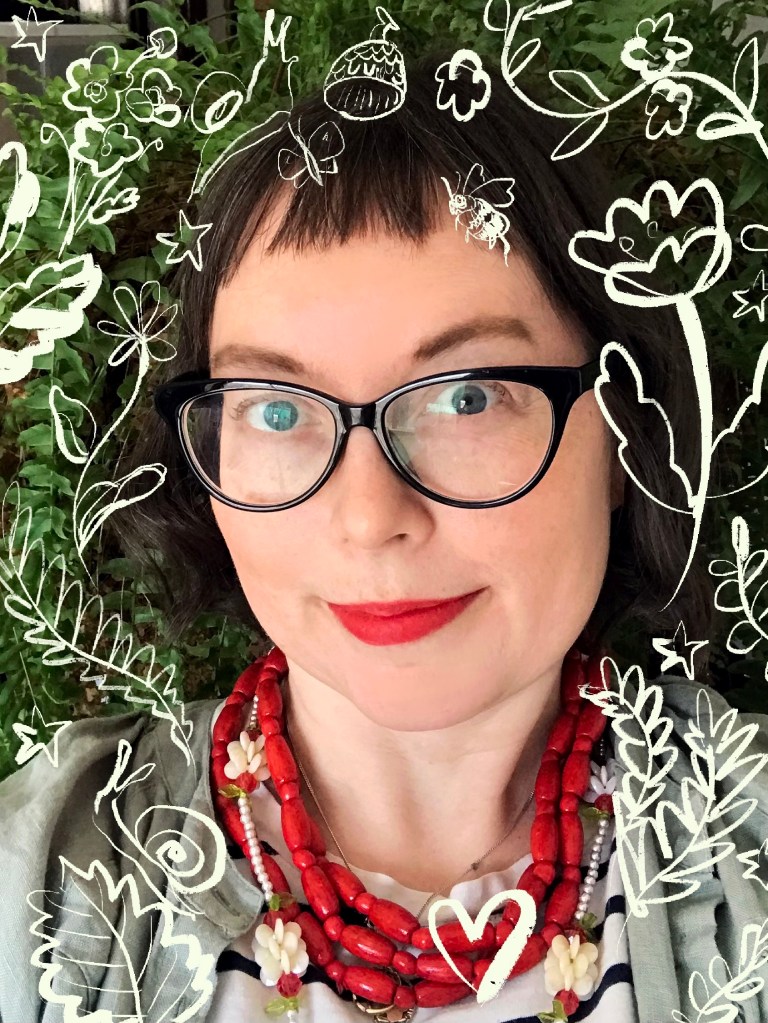
Lauren Soloy has lived on both coasts of Canada, always within reach of the sea. She currently lives in Nova Scotia, in a house that is exactly 100 years older than she is, with her librarian husband, two curious children, an ever-expanding collection of books, two hives of bees and one grumpy cat. She is the author and illustrator of When Emily Was Small and Etty Darwin and the Four Pebble Problem, as well as the illustrator of the I’s the B’y: The Beloved Newfoundland Folk Song. Her new book is The Hidden World of Gnomes.
1. As a writer and illustrator, you use both words and visuals to capture a story. Can you tell us a bit about the creative process when starting a new project?
Of course! Every project is a little bit different, but for me, every project starts with an idea that lingers, and in lingering, grows.
The Hidden World of Gnomes all began when my excellent editor, Samantha Swenson at Tundra said, “You know those gnomes you’ve been drawing? I want a gnome book!”
I had actually been drawing these characters for years, as a palette cleanser, but I could never pin them down in one story. They just wanted to exist in tiny moments.
I tried to force them to behave, but they’re too tricksy for that. I filled page after page with doodles, and page after page with information about each gnome. Honestly, I’m pretty sure I could write about the gnomes forever. But nowhere in there was a 32-page picture book with a beginning, middle, and end.
My fabulous (and fabulously patient) agent Jackie Kaiser suggested I send in what I had, so that’s what I did. And that is what turned into this wonderful, zany, rambling little book! I’m so grateful that Tundra took a chance on it. In this case, it really did take a village!
2. What inspired the world of The Pocket?
A little bit of everything! After all, as the book says, The Pocket is all around you, all the time. And aren’t pockets the most amazing things? Useful AND cozy. I’m sure all of us at some point in time have wished we could tuck a loved one into our pocket and bring them with us everywhere we go.
And the word “pocket” also has this lovely double meaning of a small lull in a busy day: a “pocket of time.”
That’s how I wanted this book to feel – like you were safely wrapped in a pocket of coziness, with everything you need, nowhere else to be, and a whole lot of love.
3. Each gnome has a very distinct name and while some relate to their job descriptions (like Hotchi-Mossy), some seem more random. How did you come up with all the names for the gnomes?
One big inspiration was Beatrix Potter. She was a master at naming things – Timmy Tiptoes, Squirrel Nutkin, Hunca Munca, Mrs. Tiggywinkle?! GAH! Those names just stick with you, and add so much personality. That was what I wanted for the gnomes, too.
Though I did steal Billy Buttons, which is, apparently, an old English name for pill bugs. How could I resist?!
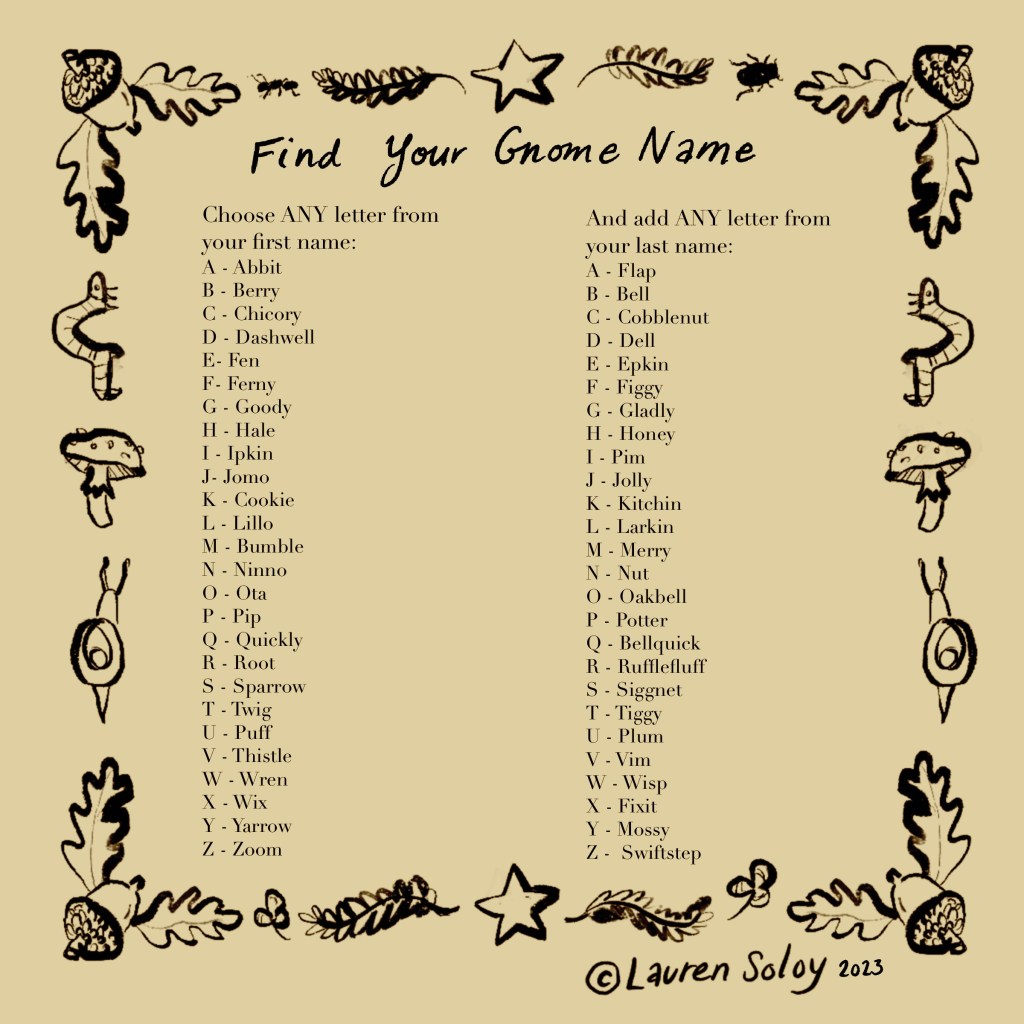
Coming up with gnome names is actually pretty fun. Here’s a name game I created that your readers can try:
4. The moons were a very clever way to divide the year and show the gnomes’ activities. I especially loved the uniqueness of the sleep moon where we could see the gnomes grow out their beards! Did you do any research on gnomes that helped you come up with these creative decisions? What was the worldbuilding process like?
Haha! Thank you! I do love their little beards.
All of my books involve a lot of research, mostly because I am a very curious person. But for gnomes, most of the worldbuilding came from sitting quietly and noticing. I noticed the way that flowers often pop up in unexpected places, and how much fun it is to tap a stick on something. I noticed how adorable bees are when they dance, and how fluffy animals get when cold weather hits. Mostly, I noticed what brings me joy.
So, the research I did for this book generally involved finding out more about the natural world around me. Nature is so amazing, and everything I learned fed into the universe of the gnomes.
5. I’m curious to know which regions the gnomes might live in. Can we find them in every country, on every continent? And if we wanted to see a gnome, what’s the best way to go about it?
There are a few things that are essential, if you would like to meet a gnome. First, you must believe that they are there! Next, you must go outside* and sit very still. Let your mind and body get very quiet. Notice any nearby nature. If you are in a place where bees are buzzing and bugs are crawling, where leaves are dancing and flowers are blooming, then they will be there. It is only a matter of time before you feel a tricky little tickle in the back of your mind, telling you that you are not alone. They’re very good at camouflage, so you may not actually see them. But if you pay attention, you’ll begin to feel them around you, going about their business with joyful industry. It is a very joyful thing, being near gnomes!
*Once you’ve become adept at noticing them out in nature, you may just find that any house with a sufficient supply of hidey nooks has a few hidden folk of its own!
Charlotte Mundy completed her undergraduate with a BSc in Nursing. Living with the curse of creativity while working in a scientific field, she has been taking writing courses at UBC to satisfy her appetite for literature. She has always enjoyed reading and writing and hopes to one day become an author.
For extra content, Lauren chatted with our managing editor over on our YouTube channel!
 YOUNG ADULTING