Interview by Sophia Thomson
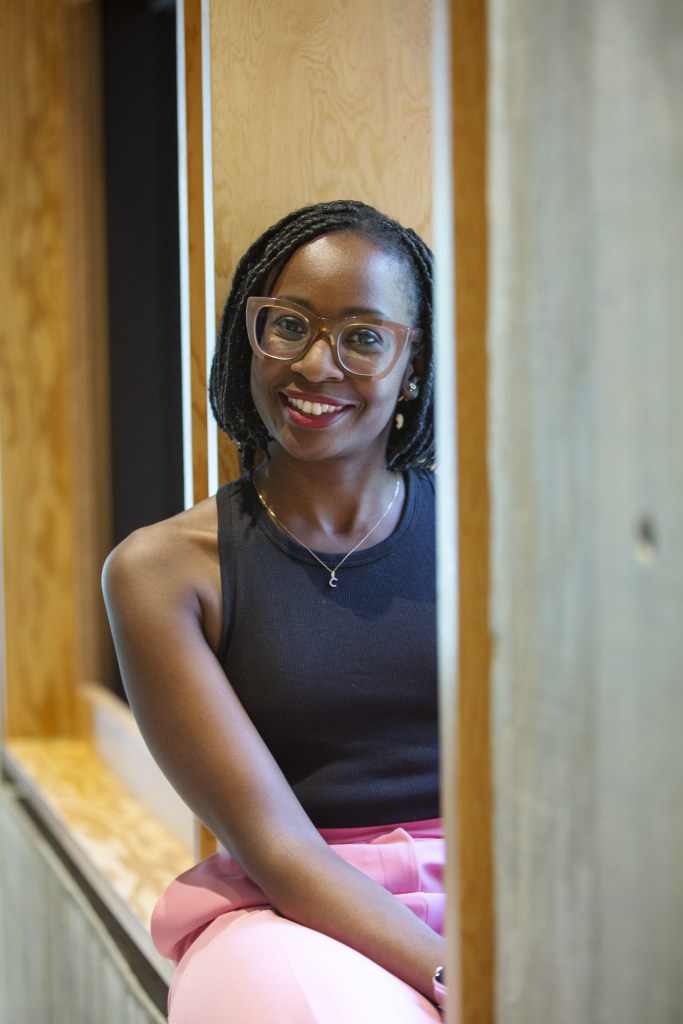
Chantaie Allick is a writer, freelance journalist, strategist and consultant. She’s a storyteller and communicator at her core. She helps business owners and creators share their unique stories with the world. Chantaie is based in Toronto.
Chantaie’s picture book, Amoya Blackwood Is Brave released April 15, 2025 with Tundra Books and is available now! Check it out here.
Dear Chantaie,
Thank you so much for your interest and willingness to be featured on Young Adulting! I was absolutely charmed by Amoya and her journey; it’s incredibly important to share stories about standing tall and being exactly who you are, and Amoya does just that. We’re so excited to have you here to share your insight, advice, and experience while writing Amoya Blackwood Is Brave. So, without further ado, let’s get into it!
With a tremendous resume in journalism, brand writing, and consulting, you’re clearly no stranger to being a storyteller, so, what was the experience of shifting into writing your debut children’s book like? Perhaps you can share writing rituals you might have, and whether you found new/different ones for writing fiction?
Writing Amoya was very much about exploration. While I’d worked on fiction projects before and had ideas for kids book, I hadn’t sat down to write one before this book. So, I did what I always do when starting a new project: research. I read picture books, ones I’d loved as a kid and new ones. I explored the different rhythms and cadences and approaches. And then I did some thinking on it, let it steep a bit in my subconscious before sitting down to write.
Can you share a bit about what inspired you to write Amoya Blackwood Is Brave or even what drew you to writing for younger audiences?
Amoya Blackwood is an actual person. She’s my niece. The idea for the story came to me when she was five or six. I was watching her play and be just wonderfully and wholly herself and it made me wonder, when do they lose that. When do we lose that freedom. It made me think of her at that age and slowly the idea of a bold and free little girl came to life. As did the notion that often it’s the adults in our lives who can either help us move forward as ourselves or make us begin to hide ourselves. It felt like an idea that was so important to share with kids and the adults out there who could relate to Amoya’s experience.
Taking inspiration from Amoya and her wonderful gran, what would you tell fellow writers or aspiring writers who might be feeling small or discouraged? In other words, what’s the best writing advice you’ve ever received or would like to share?
It’s easy to get discouraged as a writer. Rejection and self-doubt are an unfun but real part of the experience if you want to do it professionally. I try to ground myself in why I write—I want to create and share untold stories. I’ve learned over the years that that doesn’t have to necessarily mean publication. And there is actually a lot of joy and beauty in the process of writing simply because I have a story I want to bring to life. Without thinking about selling it. I write poetry that I don’t think I’ll ever seek to get published—it’s for me. And my friends and family sometimes. There’s joy in the practice and that practice keeps me ready so that when the opportunity to share does come or I seek it out, I’m ready with ideas and concepts and the skill I need to write. So I guess my advice is simply to write, for the joy of it and the practice that comes with it. To hold on to the part of writing that lights you up and sets the world aside as you do it.
Were there any aspects of the illustrations you advocated for being included in your picture book? It seems like Aaron Marin’s beautiful, bold, and colourful illustrations match up wonderfully with Amoya’s story and, while I’m aware authors and illustrators rarely collaborate directly, I’d love to know what creative artistic freedom you might have had in the process.
I got to choose Aaron, in that my editor gave me a list of options and with her guidance (and input from my niece) we landed on Aaron. He and the team at Tundra truly understood the story and Amoya and brought her to life far beyond what I had initially imagined. I wanted her to come to life and Aaron did that and so much more, the energy of the words are perfectly paired with the illustrations. In this case my role was to trust and provide input in places where it could be helpful to continue to inspire.
While I realize Amoya Blackwood Is Brave was only just published earlier this year, is it too soon to ask if you’re working on anything new in the fiction realm? If not, we’d love to know!
I am! I was diagnosed with autism later in life and I’m reflecting on my childhood experiences through this new lens. I have ideas and drafts for a kids book and potential adult fiction. I’m going to enjoy the practice and the process and see what comes to life from it.
Bonus question! Is there anything else you’d like to share about Amoya as a protagonist, or the picture book as a whole, that you weren’t able to through your other answers? Any parting words to children reading Amoya Blackwood Is Brave?
I really do hope Amoya helps any reader, big or small, see themselves and their own potentially for bravely being themselves in all they do. I have had adults tell me they teared up reading it to their kids because they saw themselves in Amoya and adults in their lives in Gran. I think the world needs more of us choosing bravery and I’d love for it to inspire more of us adults to bravely be ourselves and model that behaviour for the kiddos in our lives.
 YOUNG ADULTING